

Driving a coach bus in California requires a Class B commercial driver license with a Passenger (P) endorsement. The requirement applies to any vehicle designed to carry more than 10 passengers for hire. Drivers who carry students also need a School Pupil Activity Bus certificate issued by the California Highway Patrol, and an operator that charges for transport generally needs a TCP permit from the California Public Utilities Commission.
Operating a coach bus in California takes more than a standard driver’s license. Any vehicle designed to carry more than 10 passengers for hire requires a commercial license, and the credentials build from there.
This guide walks through each requirement in the order a driver or a fleet manager meets it: the Class B commercial driver license, the Passenger (P) endorsement, the School Pupil Activity Bus certificate required when students are carried, and the operating permit a business needs before it can charge for transport.
From the high-end resorts of San Diego to the bustling corporate corridors of Los Angeles, professional drivers are the backbone of the industry.
This guide from CoachWest breaks down exactly how to become a coach bus driver in California. We’ll look at the specific commercial requirements, those tricky passenger endorsements, and the specialized certificates that set the pros apart from the pack.
Why the California Market is Different
California does things a bit differently than other states. If you’re operating here, you have to deal with some of the strictest safety standards in the country. For a business owner, this means your hiring process has to be airtight. For a driver, it means your credentials carry a lot of weight.
In California, anyone driving a vehicle designed to carry more than 10 people for hire needs a commercial license. This rule applies even if you are driving a 15-passenger van that looks like a standard commuter vehicle. Understanding these thresholds and the difference between a bus and a coach bus, is the first step toward staying legal on the road.
The First Milestone: Scoring Your Class B CDL
If you want to operate a luxury coach or an executive bus, you’re going to need a Class B Commercial Driver’s License (CDL).
Class B CDL is required in California for any vehicle designed to carry more than 10 passengers for hire, including a 15 passenger van used commercially.
This is the standard for the industry. While a Class A license allows you to pull heavy trailers, the Class B is perfectly suited for the rigid chassis of a motorcoach.
Checking the Basic Requirements
Before you can even look at a bus, you have to meet the California DMV’s baseline criteria.
- The Age Factor: You can get a CDL at 18 if you plan to stay within California borders. However, if you want to take a group across state lines to Las Vegas or Phoenix, you have to be at least 21.
- Clean Record Matters: The DMV will dig into your driving history. A history of serious violations or recent accidents can put a quick stop to your professional goals.
- The Physical Checkup: You will need to pass a Department of Transportation (DOT) medical exam. A certified medical examiner will check your vision, hearing, and overall health to make sure you can handle long hours on the road.
Getting the Passenger (P) Endorsement
Think of a CDL as the foundation and endorsements as the specialized upgrades. If you want to drive a passenger vehicle, you must have the Passenger (P) endorsement. Passenger (P) endorsement is added to the Class B license by written and road skills tests, and required to carry passengers. This tells the state and your future employer that you know how to handle more than a large bus; you know how to handle the people inside it.
Testing for the P Endorsement
To get this on your license, you have to pass a specific written knowledge test and a road skills test. The road test is where many people get tripped up. You must take the test in a vehicle that represents the type of bus you plan to drive.
If you take your test in a smaller shuttle van, the DMV will put a restriction on your license that prevents you from driving full-size coaches. For those aiming for the big leagues, we always recommend testing in a larger vehicle to keep your career options wide open.
The Secret Weapon: The SPAB Certificate
For drivers and fleet owners in the charter world, the School Pupil Activity Bus (SPAB) certificate is a major advantage. The School Pupil Activity Bus certificate, issued by the California Highway Patrol, is required when students are transported. This isn’t a full school bus license, but it allows you to transport students to and from school-sanctioned events like sports games or field trips.
Why SPAB Training is Rigorous
California law requires SPAB drivers to go through extensive training. You’re looking at a minimum of 15 hours of classroom instruction and another 20 hours of behind-the-wheel practice.
The California Highway Patrol (CHP) actually conducts the testing for this certificate. They check everything from your first aid knowledge to your ability to handle a pre-trip inspection under pressure.
Holding a SPAB certificate makes a driver incredibly valuable. It allows a charter company to bid on school contracts, which are a steady source of revenue in the California market.
The Business Side: TCP Permits and Employer Rules
If you’re the one running the business, finding a driver for your coach bus and your driver’s license is only half the battle. To legally charge for transportation in California, your company needs a Transportation Charter Party (TCP) permit from the California Public Utilities Commission (CPUC), which is required for charter operations that charge for transport.
Enrollment in the Pull Notice Program
The state wants to know that you’re keeping an eye on your team. All California employers with commercial drivers must enroll in the DMV Employer Pull Notice (EPN) program.
This system sends you a report if one of your drivers gets a ticket or has an accident, even if it occurs in their personal car. It’s an important tool for managing risk and keeping your insurance rates from skyrocketing.
Mastery on the Road: Training and Skills
Passing the test is one thing, but being a great coach bus driver is another. The best training programs in California focus on more than just the rules of the road and coach bus safety practices. They teach you how to provide the “luxury experience.”
The Art of the Pre-Trip Inspection
Ask any veteran driver, and they will tell you the pre-trip inspection is where the pros shine. You have to walk around the vehicle and identify every potential safety issue, from air brake leaks to emergency exit functionality. Doing this correctly every single morning keeps your passengers safe and prevents those annoying breakdowns that ruin a client’s trip.
Smooth Handling for Luxury Passengers
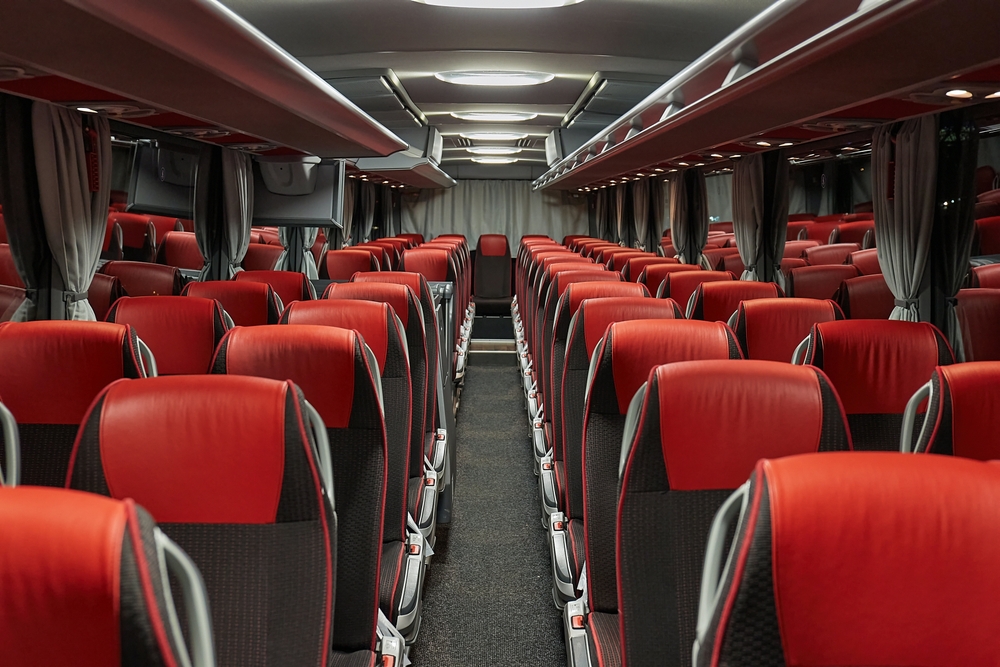
When you’re driving a high-end coach, your passengers should barely feel you move. Mastering smooth braking, gentle turns, and steady acceleration is part of the job. In the luxury sector, your ability to provide a seamless ride is what keeps clients coming back.
Frequently Asked Questions
What type of license do you need to drive a bus in California?
For any vehicle seating more than 10 people for hire, you need a Class B Commercial Driver’s License (CDL) with a Passenger (P) endorsement.
Do you need a CDL to drive a coach bus?
Yes. California law is very clear on this. If the vehicle is designed, used, or maintained to carry more than 10 passengers for profit or by a nonprofit, a CDL is a requirement.
How do I become a coach bus driver in California?
Start by getting your medical certificate and passing the DMV’s written tests for a commercial learner’s permit. Then, complete your behind-the-wheel training and pass the skills test at the DMV.
What are the specific licensing requirements for a tour bus driver?
A tour bus driver needs a Class B CDL and a Passenger endorsement. If the tour involves transporting students, a SPAB certificate from the CHP is also required.
Can you drive a 15-passenger van with a standard license?
Not in California if you are doing it for hire or as part of a business. Because it carries more than 10 people, it is legally a bus and requires a CDL with a Passenger endorsement.
Level Up Your Fleet with CoachWest
At CoachWest, we specialize in providing the vehicles that set the standard for the California market. From the durable composite builds of Diamond Coach to the cutting-edge technology of Endera electric shuttles, we have the inventory to help your business grow.
Ready to find the perfect vehicle for your newly licensed drivers? Check out our latest luxury coach bus inventory or give us a call at 310-609-2900 to talk shop with one of our specialists. We’re here to help you build a fleet that stands out!